Arabic Letter Recognition
Identify Arabic letters and become familiar with their different shapes and sounds.

Begin your Quran learning journey by understanding Arabic letters, their sounds and the signs that shape their pronunciation. Our online Noorani Qaida course is designed to help beginners build reading skills step by step.
Suitable for new learners and students building their reading foundations.
Noorani Qaida is a widely used introductory learning resource for students who are beginning to read Arabic and the Quran. It introduces the letters and common pronunciation marks gradually, helping learners progress from individual letters to connected sounds and words.
In online lessons, students can practise letter recognition, listen to pronunciation guidance and read aloud with a teacher. Regular revision helps reinforce the skills needed before moving on to longer Quran passages.
The course can suit children who are just starting out as well as older learners who want to strengthen their reading basics. Progress depends on each learner's starting level, practice and learning needs.
Also read: Noorani Qaida PDF and reading guide →Learning the building blocks of Arabic reading can make later Quran lessons easier to approach. The course focuses on skills that beginners can practise and revisit as they progress.
Identify Arabic letters and become familiar with their different shapes and sounds.
Practise the sounds of letters with guidance and repeated reading exercises.
Learn how vowel marks and other basic symbols influence the way Arabic text is read.
Move from letters and short combinations towards more developed reading exercises as your skills improve.
Lessons can be adapted to a student's level. Typical beginner topics include the following foundational reading skills.
Recognising letters, their names, forms and individual sounds.
Understanding how letters appear in combinations and connected forms.
Practising short vowel marks and their effect on pronunciation.
Learning how these signs are read within Arabic letter combinations.
Practising doubled consonant sounds and lengthened vowel sounds.
Working through additional signs and introductory reading exercises appropriate to the learner's level.
Tajweed and stopping signs can be introduced as appropriate. For a dedicated study of recitation rules, explore our online Tajweed course.
Online lessons allow students to learn from home while practising directly with a teacher.
Share the learner's age, reading level and learning needs.
Work on letter recognition, pronunciation and reading exercises.
Review previous lessons and build skills at a suitable pace.
Looking for a Noorani Qaida reading resource? Visit our dedicated PDF page to find the material and information available for your practice. You can use a suitable reading resource alongside your lessons for revision.
Read Noorani Qaida PDF →Children, teenagers and adults can begin with Noorani Qaida. The appropriate starting point depends on the learner's familiarity with Arabic letters and reading.
No. Noorani Qaida is intended to introduce foundational Arabic reading skills, including letter recognition and common pronunciation marks.
Yes. Online lessons can provide live practice and teacher guidance from home, provided you have a suitable internet connection and device.
Visit our Noorani Qaida PDF page for information about the reading resource available on our website.
Depending on your reading level, you may progress to Quran reading practice and more focused recitation lessons such as Tajweed.
There is no single timeline for every student. Progress depends on the starting level, lesson frequency, revision and individual learning pace.
 Beginners
Build a foundation in Arabic letters, pronunciation, joining letters and essential reading rules.
Explore Course →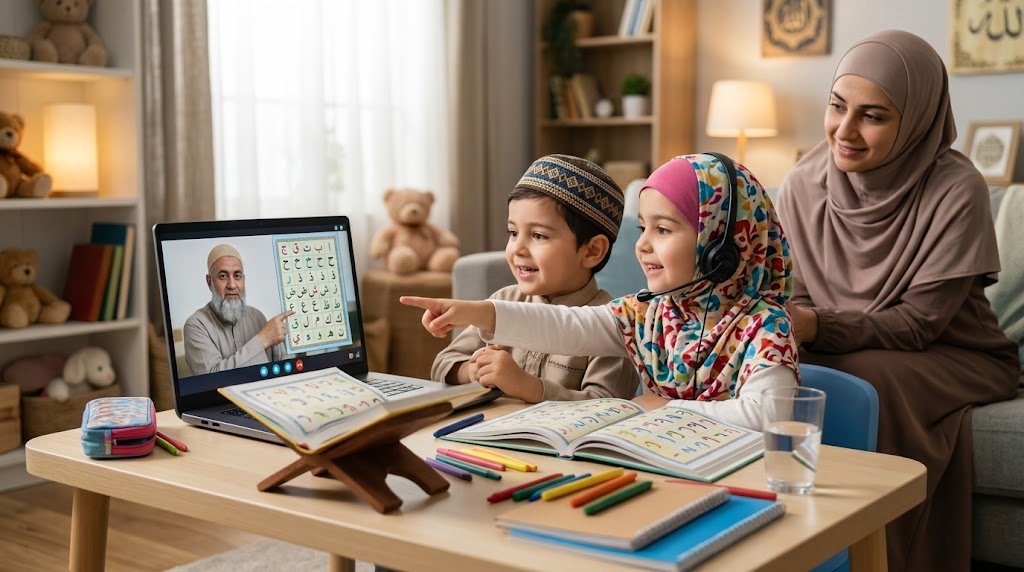 Young learners
Age-appropriate lessons with guided practice and a learning pace designed for children.
Explore Course →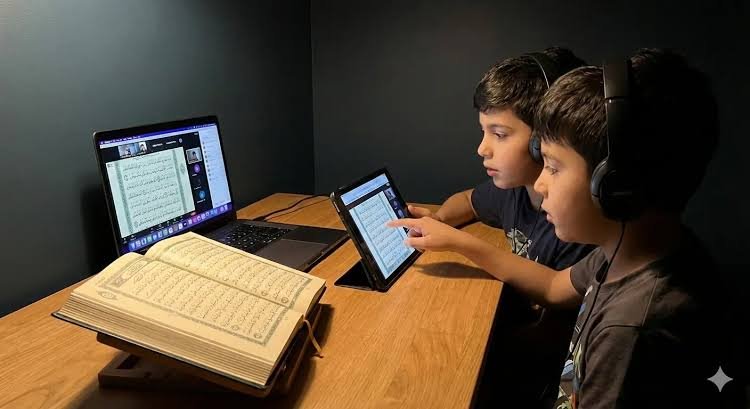 All ages
Explore Islamic beliefs, history, manners, worship and foundational religious knowledge.
Explore Course →Start with the fundamentals, practise consistently and build towards reading the Quran with greater confidence.